AWS re Invent 2025 came again with big noise this year and honestly the announcements were huge specially for developers. Every year AWS brings something new but this time they pushed hard into agentic AI. You know the trend right now. Every big tech company is trying to move beyond normal AI tools and shift into systems that act like agents. They can plan take actions run workflows and do tasks automatically. Developers want faster automation less manual handling and smart systems that truly behave like assistants at work. And this year AWS said ok let’s jump fully into that area.
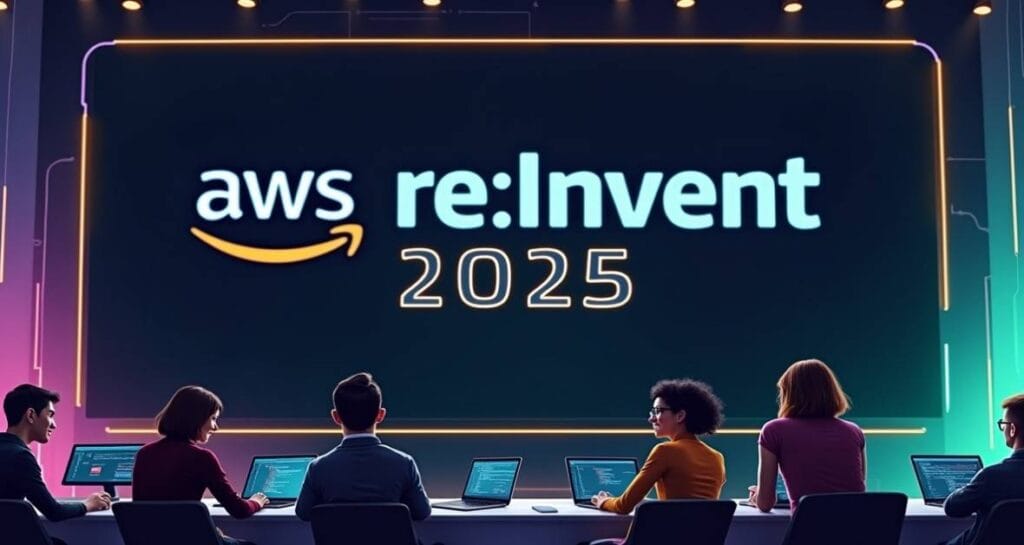
So this blog goes through the major agentic AI updates. Why they matter. What exactly changes for developers. And why AWS is basically trying to stay ahead in the global AI race right now.
AWS goes all-in on agentic AI
AWS already had many AI services. But this time they combined automation planning reasoning action execution into one ecosystem. Not just models or APIs. This time it’s more like AI that can think a bit do things and connect with other AWS tools. Honestly it looks like Amazon is trying to give developers one platform where they can build apps that run like mini digital workers.
Agentic AI means AI that doesn’t just give answers. It completes tasks. It understands context. It decides next steps. It follows instructions across multiple tools. And AWS made this the center theme.
New agent frameworks that change the workflow
One of the biggest updates was the new AWS Agent Framework. Earlier devs needed multiple external tools to build agent-like systems. Now AWS gives everything in-house. The framework mostly focuses on building agents that can:
- plan multi-step workflows
- connect with AWS services like S3 Lambda DynamoDB
- take actions without extra prompts
- create reasoning chains for complex tasks
- integrate with business apps directly
The whole thing makes development faster. And yes less confusing. Earlier devs had to glue many services manually. Now it has simplified that part. They also improved latency a lot so tasks feel smoother.
Stronger multimodal capabilities
Another major move was pushing multimodal tech. AWS added tools that let developers build agents which understand text images audio video all in one pipeline. This was missing earlier. Most people had to use external models or third-party APIs. But now AWS made it native inside the platform.
Why it matters? Because a large chunk of upcoming apps will rely on more than text. Imagine agents that can look at product photos understand device logs read receipts detect errors from images or even process video instructions. That’s where things are clearly going.
Developers get more superpowers with this update. No need to spend time stitching messy APIs now.
Amazon Q gets massive improvements
Amazon Q was already Amazon’s AI assistant for coding. But now they upgraded it into a full agentic companion. It’s not only writing code but generating complete features. Running debugging cycles. Checking logs. Fixing errors. And automating workflows across AWS accounts.
Honestly this feels like AWS trying to compete with GitHub Copilot and other coding agents but in a more deep AWS-integrated way. Q now can:
- build entire functions
- deploy updates
- monitor issues
- rewrite modules
- generate unit tests
- run commands inside AWS environments
It behaves more like a cloud engineer who works beside you. Some devs might feel nervous but others will feel life getting easier.
Vector database upgrades for smarter agents
Agents need memory. They need long-term knowledge. They need context store. it has improved its vector database Amazon OpenSearch and Aurora to support large memory retrieval tasks. It became faster with lower cost and better accuracy. Many companies need this for enterprise-level agents that behave consistently and remember company rules.
Agents without memory feel dumb. With memory they become more useful. AWS clearly understood that and pushed it hard this year.
Better RLHF and fine-tuning tools
Developers always want to customize models. But earlier fine-tuning felt painful. Many steps. Many configs. Many chances to break things. AWS introduced a simplified fine-tuning pipeline that works faster and doesn’t require insane GPU setups. They also added RLHF tools to help companies train AI with human feedback in a clean workflow.
This will help businesses build custom agents for customer support logistics finance code review product documentation and many more tasks. It also helps maintain brand style which matters a lot these days.
Cheaper and faster compute for AI workloads
AWS knew that developers kept complaining that GPU costs are getting out of hand. So they announced newer versions of Inferentia and Trainium chips. These chips run AI workloads at a much cheaper rate. Especially for inference heavy applications like chatbots agents and automation systems.
Lower cost means more startups will try AI. And more enterprises will switch internal tools from older systems to new AI-powered flows. it is basically saying hey we know AI is expensive so here take cheaper compute and build whatever you want.
Agentic automation for enterprise teams
AWS talked a lot about enterprise automation. They showed how agentic systems can handle HR tasks finance workflows supply-chain operations code deployments and even compliance tasks. Many companies spend so much money and time on repetitive workflows. AWS wants to replace these with agents.
Some examples shown:
- agents handling ticketing workflows
- agents generating compliance reports
- agents managing cloud cost optimization
- agents checking performance logs
- agents answering employee queries
The future looks more automated. And AWS is positioning itself as the main platform to run all of it.
AI safety updates to avoid messy outputs
AWS also added new guardrails. They want to avoid hallucinations toxic outputs security mistakes and unauthorized access flows. They introduced better filtering systems and safety layers that wrap around the AI responses.
Because enterprise customers are very strict on safety these days. One mistake can cause serious trust issues. So AWS focused heavy on secure agentic AI.
Developers now get a more unified AI experience
Before this year AWS felt like a big toolbox. Many services doing many different things. But not really talking to each other smoothly. Now AWS made a strong push to unify everything. Agents built on AWS now connect to:
- Bedrock
- Lambda
- API Gateway
- S3
- RDS/Aurora
- DynamoDB
- CloudWatch
- SageMaker
Everything feels more connected. More like a single environment where AI agents can live and run almost like employees inside the cloud.
This change matters a lot because developers hate fragmented workflows. Now it looks cleaner.
Why this update matters in the global AI race
Every major company is racing to build the best agentic ecosystem. Google pushing Gemini agents. Microsoft pushing Copilot agents. Meta opening open-source models. Amazon did not want to fall behind so this year they made a big comeback with proper agentic capabilities.
Developers get more choices. Enterprises get stronger automation. And honestly the competition will bring better tools for everyone.
AWS stepping deeper into agentic AI will force others to speed up too.
CHECK: Gemini Nano Banana AI’s New Feature Lets You Transform Your Image Into a 3D Cartoon Caricature
What this means for developers in 2025 and beyond
If you are a developer the major takeaway is simple. AI is no longer optional. It will become part of every workflow. Understanding how agents work how to integrate them how to test them and how to guide them will become normal developer responsibility.
AWS reInvent 2025 made one thing super clear. The next generation of apps will not be only apps. They will be AI-powered systems running tasks automatically. And developers who learn these tools early will find major advantages in the coming years.
So this is just the beginning. The way AWS is pushing agentic AI shows how the future of software development is shifting fast. And honestly it’s exciting because it brings more creativity more speed and less boring repetitive work.

 By
By